


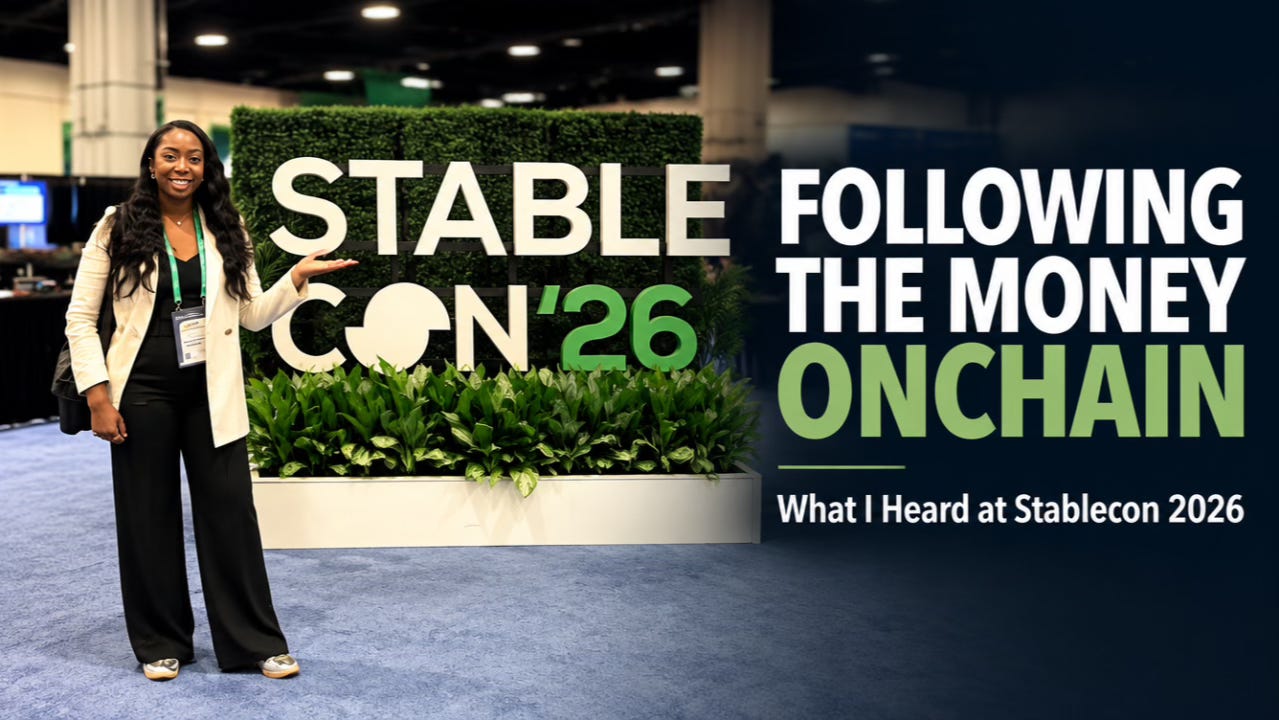
What I heard at Day 1 at Stablecon about stablecoins, banks, risk, AI and what students should be learning
There are some big numbers being thrown around about stablecoins. The one I keep coming back to in my research is $390 billion. McKinsey, estimates that actual stablecoin payments were running at about $390 billion annually based on December 2025 activity, with business-to-business payments accounting for roughly $226 billion.
That sounds like a lot until you compare it with global payments overall, where McKinsey puts it at about 0.02%. But it more than doubled in a year. I wanted to know where that money is actually moving and whether banks see something worth chasing. That’s one of the questions I took to Stablecon in Washington, D.C.
McKinsey: Stablecoins in payments: What the raw transaction numbers miss
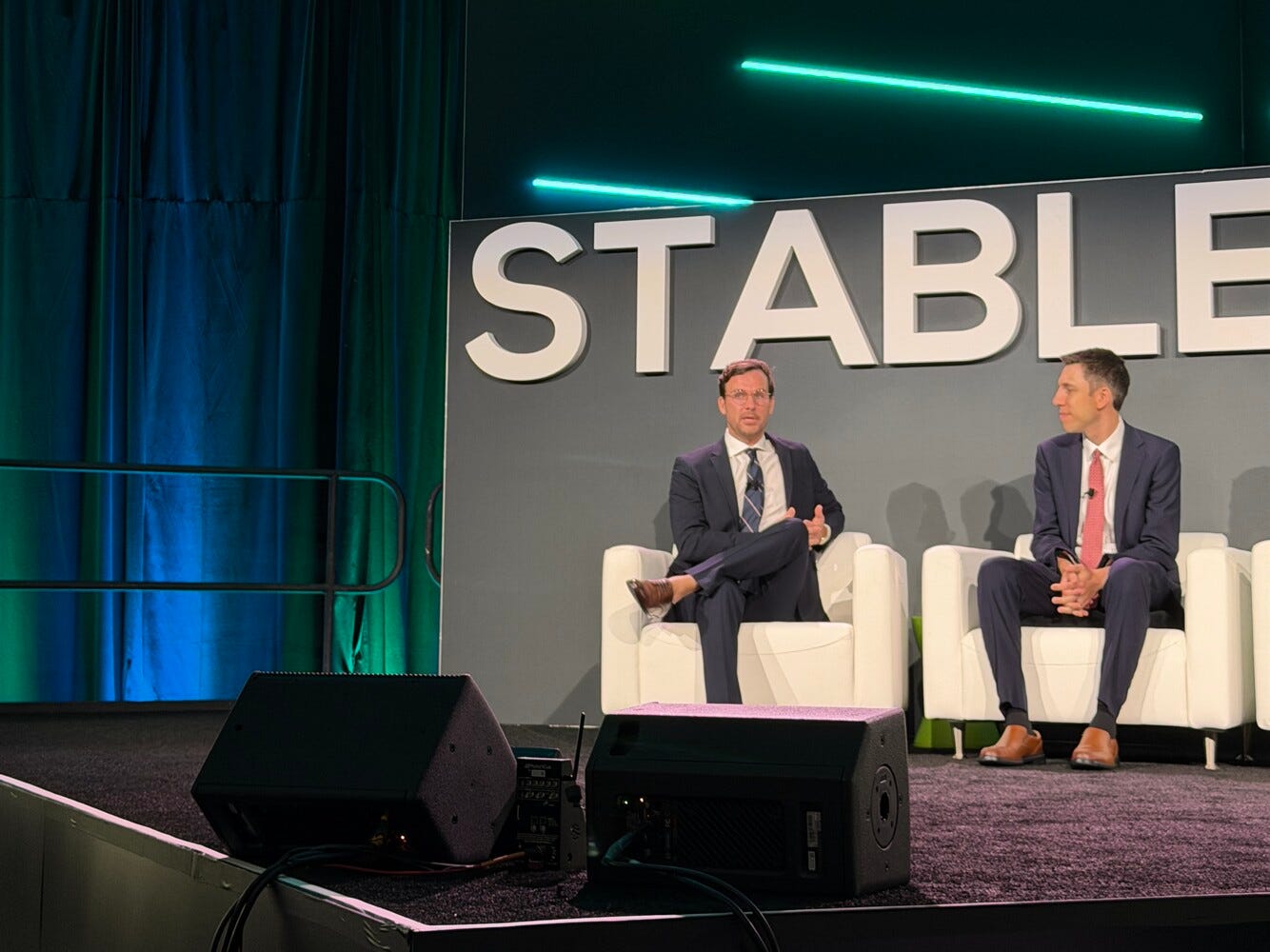
The session I most wanted to hear was with FDIC Chairman Travis Hill. He pointed to places where this technology could address things that are genuinely slow today: payments that cross borders, currency exchange, trade finance and moving collateral between institutions. Then he walked through what a bank has to figure out before it can do any of that. How does the blockchain network work? Who holds the keys? Which outside vendors are involved? What are the cybersecurity risks? How do you meet anti-money laundering requirements?
The rules are still being written. The FDIC has proposed regulations implementing the GENIUS Act for payment stablecoin issuers that are subsidiaries of FDIC-supervised banks. The proposal also addresses tokenized deposits and makes an important point: deposit insurance doesn’t change simply because a bank uses different technology to record the deposit.

Later, I got to see what some of this looks like when a bank actually starts building. One of the highlights for me was seeing Jamie Walker on stage with Tedd Huff (Voalyre/Fintech Confidential) . I’ve known Jamie through Atlanta’s payments community for years. He’s Head of Digital Assets and Money Movement at U.S. Bank, and he was there as the bank announced USBDC, its own dollar-backed stablecoin.
U.S. Bank had completed a live cross-border pilot between its North American and European operations using the Stellar public blockchain. The pilot covered minting, redemption, freezing and clawback capabilities and connected to systems the bank already uses across finance, risk, compliance and operations. That last part is what stayed with me. Moving money onchain is one piece. The bank still has to build everything that sits around the transaction. It left me wondering whether banks will issue their own stablecoins, tokenize the deposits they already hold, or ultimately do some of both.

I also sat down with my Atlanta friend Charles E. Potts of the American Fintech Council for a Fintech Talks conversation. He said something that has stayed with me: “It’s the first transaction that’s the most expensive.” That initial investment matters to many financial institutions. New infrastructure has to be built, integrated and controlled before the efficiencies can come at scale.
That’s really what I’m watching now: what actually makes it from announcement to implementation?
Cross-border payments came up over and over at Stablecon. So did managing cash and liquidity. I heard conversations about business payments, global payroll and contractor payouts, remittances, settlement of tokenized assets and moving collateral. The McKinsey numbers make some of this less theoretical. B2B payments alone account for roughly $226 billion of the stablecoin payment activity McKinsey and Artemis identified.
There are consumer uses too. A stablecoin-linked card can allow someone to spend a stablecoin balance through something that feels like a normal card. Most of us don’t think about payment rails when we tap a card today. What matters to me is whether the technology solves a real problem. Does it make sending money across a border easier? Can a company move cash more efficiently? Can someone get paid in a country where dollars are difficult to access?
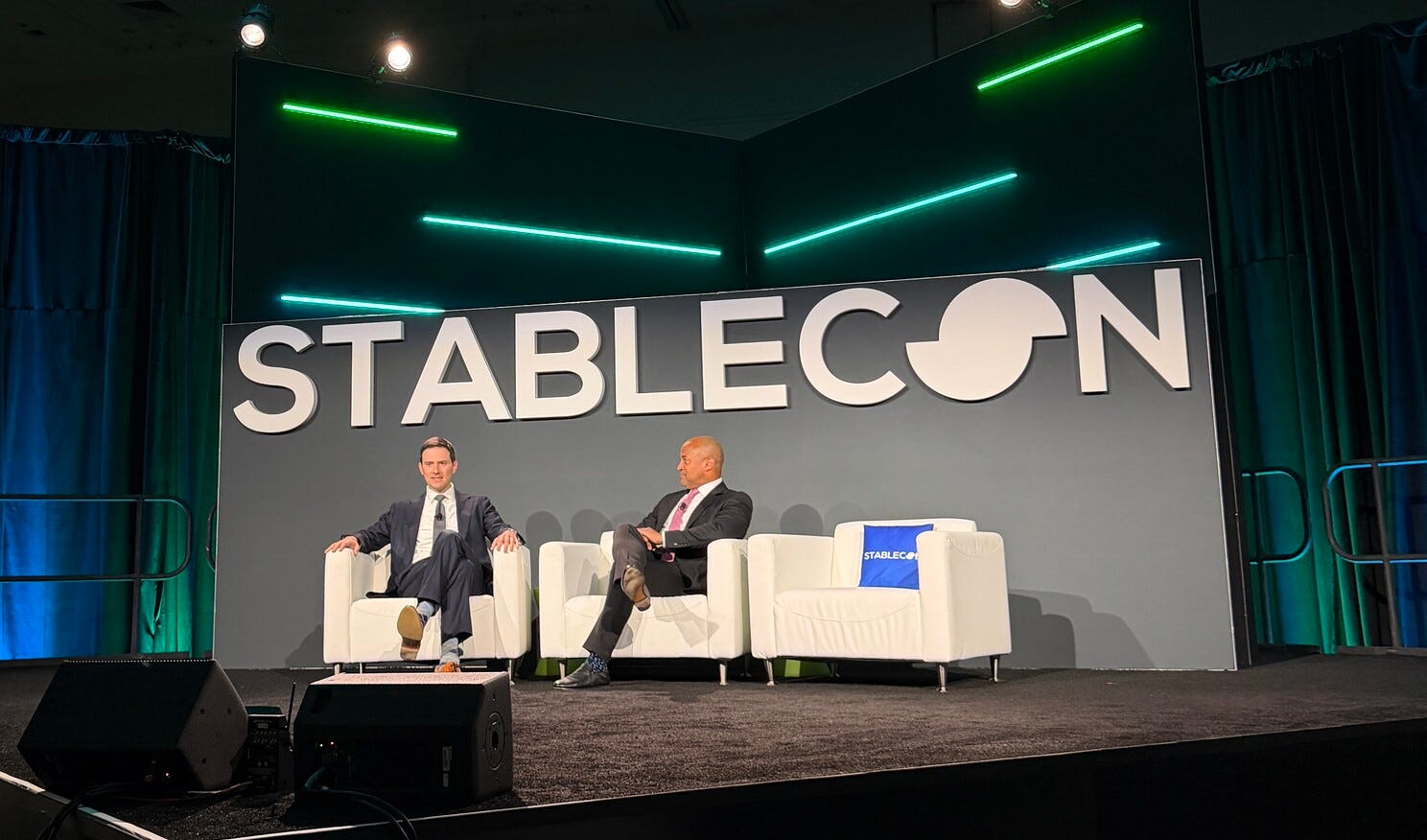
The conversation between Dante A. Disparte of Circle and Josh Lipsky of the Atlantic Council pushed me to think beyond the U.S. market. If you live somewhere with high inflation, an unstable currency or limited access to dollars, holding or receiving dollars through a stablecoin has a very different value proposition than it does here. It also creates real questions for governments and central banks.
I still have questions about cost. A stablecoin might make one step cheaper, but someone still has to move money onto the network and back off, convert currencies, verify identities and provide the banking infrastructure underneath. Where does the cost actually come out, and where does the friction just move somewhere else?
Trust was another theme that kept following me. The night before Stablecon, I went to Socure’s Identity Unlocked event with Transak, BVNK and zerohash. The next day, I found myself talking with Prove, Themis and Socure on the Stablecon floor about many of the same issues around identity, fraud and trust.
We spend a lot of time talking about how money will move. We spend less time talking about how we know who’s moving it.

That got even more interesting when I heard David Birch and Michelle Beyo talk about AI agents. If an AI agent (”Taylor Swift AI”) can initiate a payment on my behalf, the system has to know what I actually authorized. Is this really my agent? Did I approve it? What is it allowed to do? How much can it spend? Now imagine agents dealing with other agents, comparing payment options, negotiating purchases or making other decisions as part of a transaction. The payment might end up being the easy part. Knowing who’s who and what they’re allowed to do could be much harder.
This is why I keep coming back to risk and compliance. Every new capability comes with questions about authorization, reserves, fraud, controls and responsibility when something goes wrong. And that matters for how we talk about careers in fintech. There are technical roles here, but there are also roles in risk, compliance, fraud, treasury, operations, cybersecurity, identity, product and regulation. Everyone in those roles needs enough understanding of the technology to be part of the conversation.
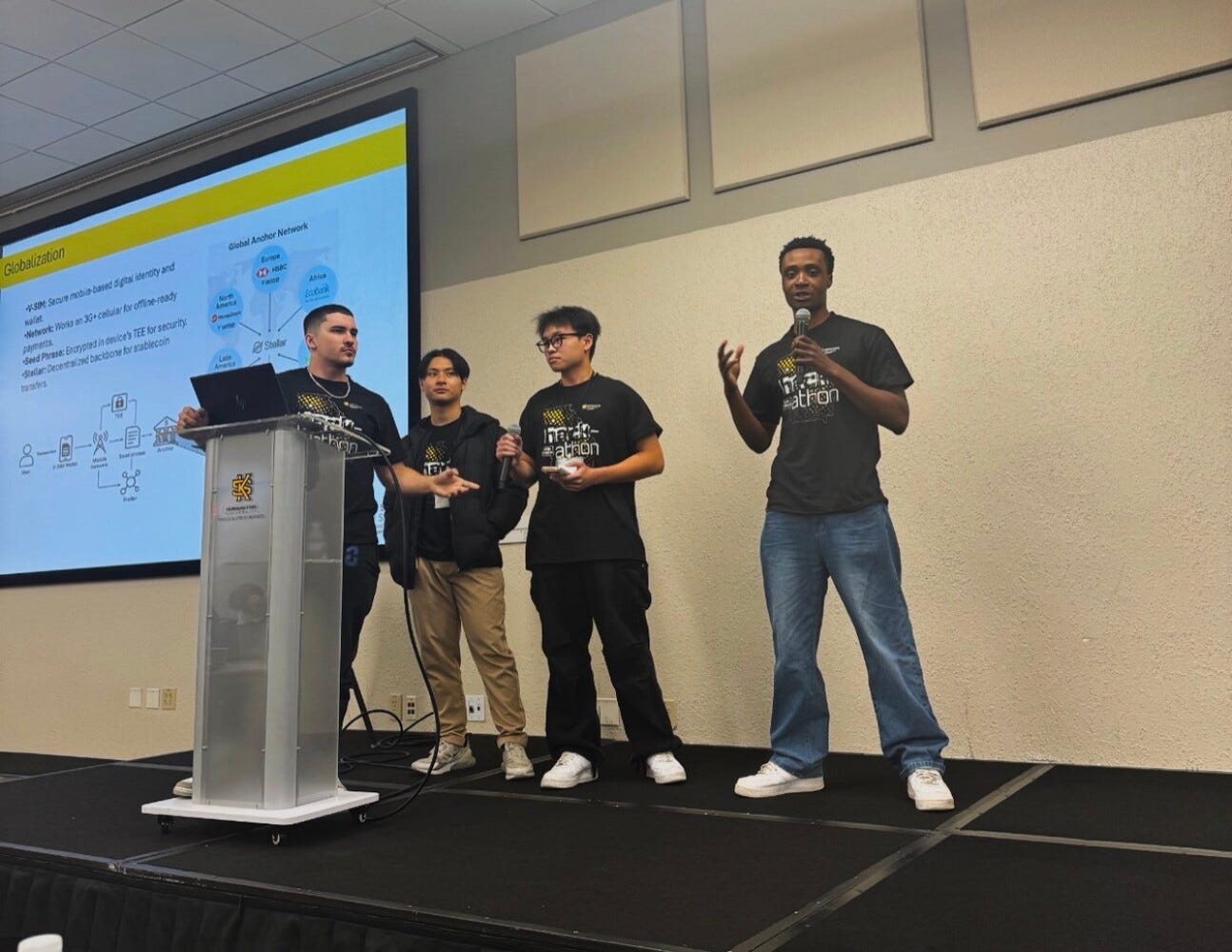
That brings me back to our students. Last fall, students from campuses across Georgia came together at the Fall Hackathon, which we partnered with Fintech Programs at Kennesaw State University. One of the challenges asked them to rethink how payments move across borders. Months later, I was sitting in Washington listening to regulators and banks wrestle with many of the same issues.
That gap between what students are learning and what the industry is working on can be much smaller than we sometimes think.
As I engage with our students after Stablecon, I will them to start with how money moves today. Understand why cross-border payments still have friction. Learn the difference between a stablecoin and a tokenized deposit. Know the basics of settlement, liquidity, identity, fraud and compliance. Then pay attention to what is changing.
You don’t need to become a blockchain engineer. But you do need enough fluency to understand the conversation, ask good questions and see how the pieces connect.
The problems are already in front of this next generation of talent. Our job is to make sure they’re ready to help solve them.